What to Look For When Buying a Used Boat: 12-Point Checklist
 From Hank Dawson's video21 September 2026
A listing that says clean and ready describes upholstery, and what ends a used-boat deal is a plate, a weld, a screw, or a piece of paper. Here are five checks from the lot-day 12-point card for a pontoon, a bass boat, or a small center console, and when to walk away.
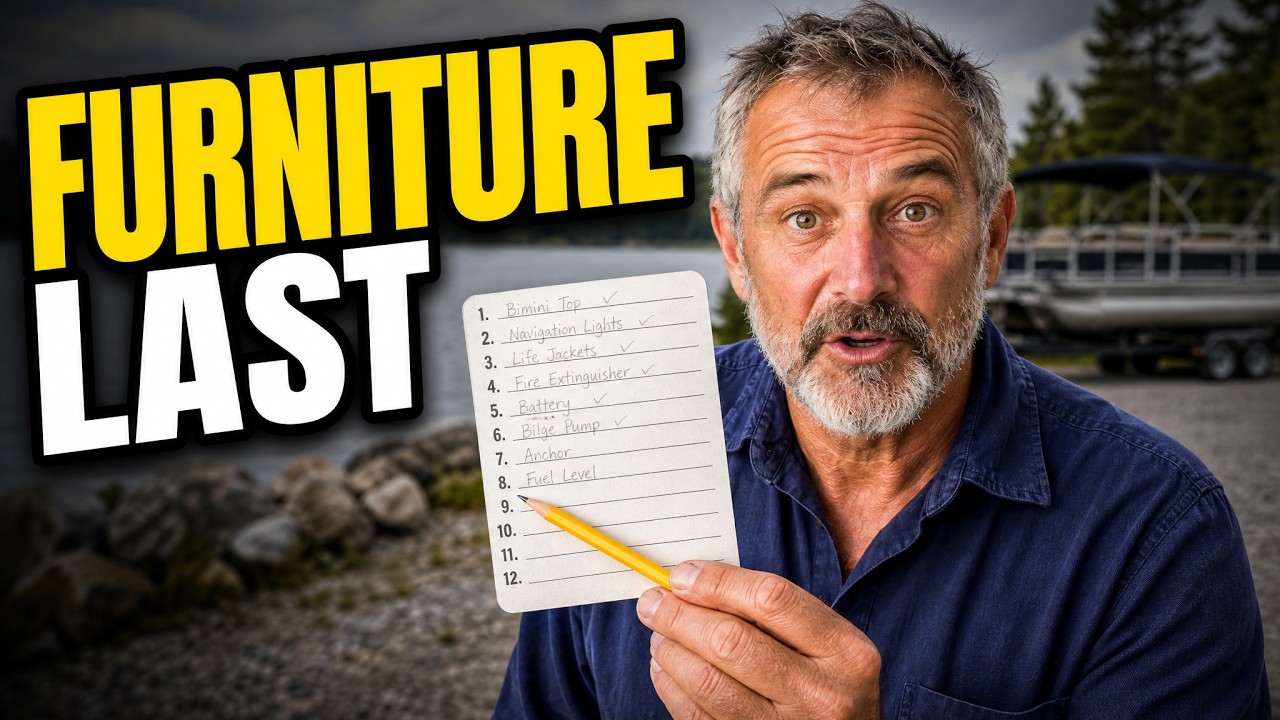
This is for you if the boat is used, on a trailer you will own, inside your ceiling, and the seller will let you run it.
The mistake is arriving with no method and letting the seller run the inspection, starting you at the furniture. Stay on the ground, put your pencil on line one, and start where they are not standing.
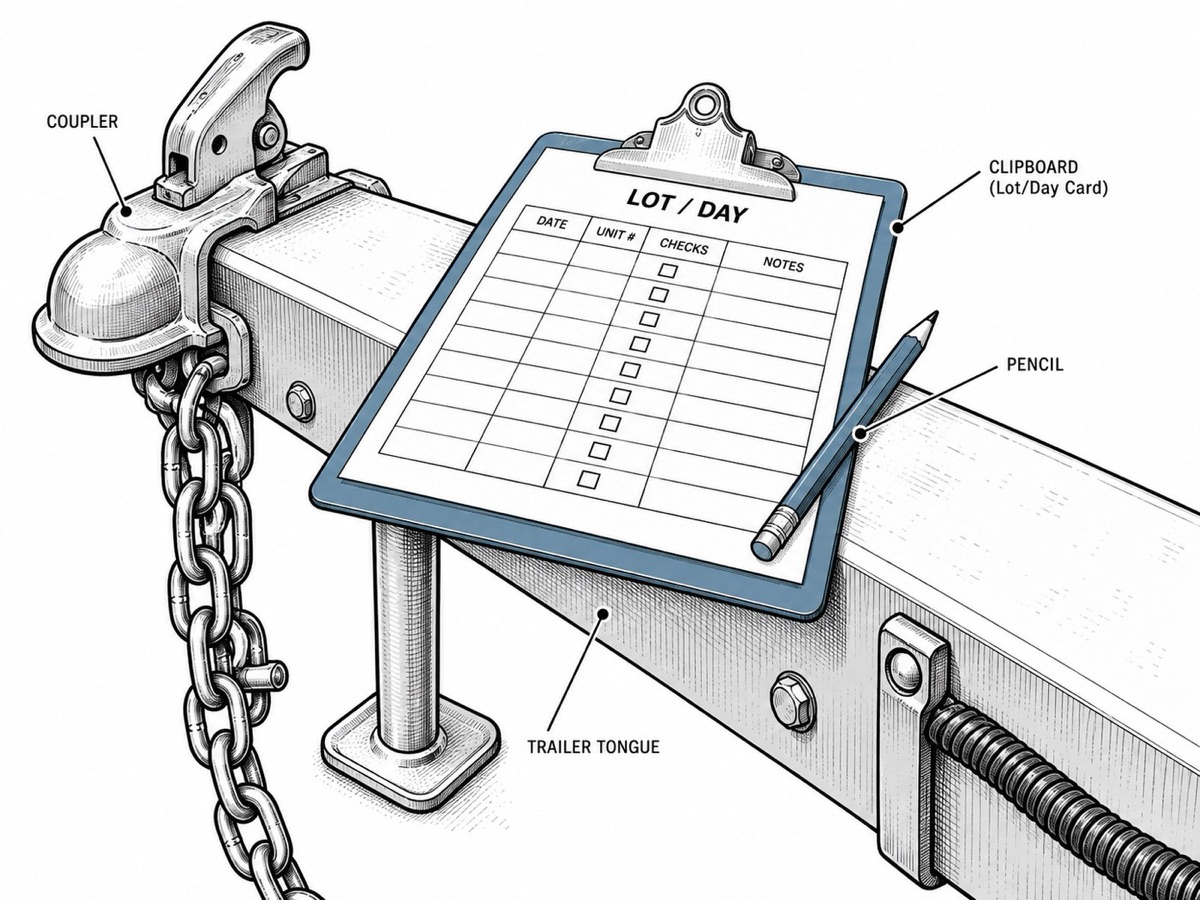
There is no Coast Guard twelve-point purchase inspection to invoke. The federal equipment rules cover flotation devices, distress signals, ventilation, and fire protection, and none of that is a hull and title card. Twelve points is the book's method, and there is no pass score. Eight of twelve is not a buy.
Six of the twelve lines stop the deal outright. The five checks below carry five of them. The sixth, line four, is the tubes.
Check 1. Two numbers, not one
Count the characters out loud, twelve on the hull and seventeen on the trailer label, then read both against the paper in your hand.
Boat and trailer are separate vehicles with separate numbers, and people match the wrong one.
- Hull identification number: twelve characters, no slashes, no hyphens, no spaces.
- Trailer number: seventeen characters, on the certification label, forward half of the left side, readable from outside.
- On a hull with a transom: starboard outboard side, within two inches of the top of the transom, the gunwale, or the hull and deck joint, whichever is lowest.
- On a pontoon with replaceable hulls: aft crossbeam, within a foot of the starboard hull attachment.
Reading both numbers out loud feels foolish on a gravel lot, and it is how you catch a transposed character.
Nobody may remove or alter a hull number without authorization from the Commandant of the Coast Guard. So a ground-off number, or a fresh sticker sitting over the old one, fails line one. Hard.
Check 2. Readable, or it fails
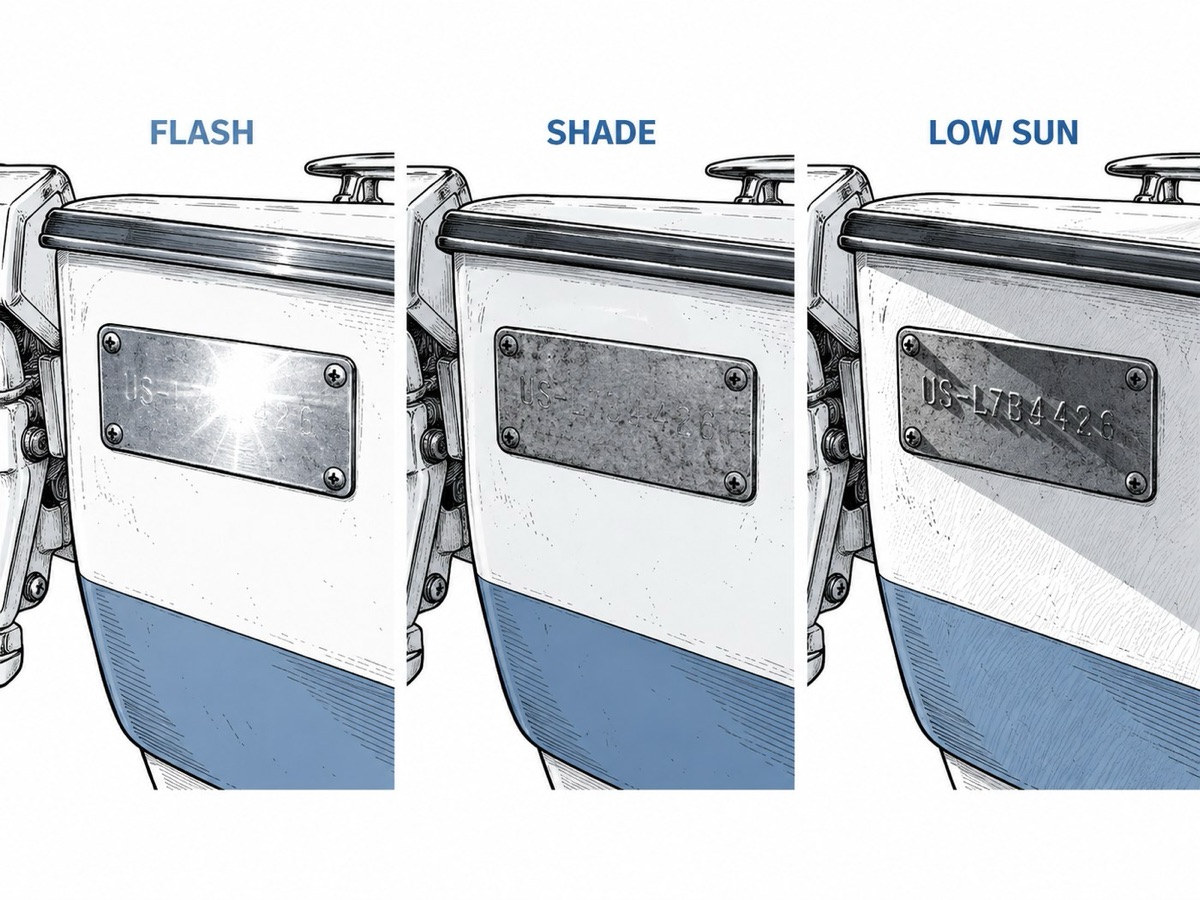
Photograph the capacity or builder plate, then read the numbers off your own phone screen instead of off the seller's description.
This is line three, the plate. Where the federal rule applies, the capacity marking has to be permanently displayed in a legible manner, clearly visible to the operator getting the boat underway. That rule covers monohull boats under 20 feet.
A pontoon is not a monohull boat, so a 22-foot pontoon with no Coast Guard plate is not automatically breaking a federal rule. Look for the builder plate: NMMA certified builders fit them to pontoons of every length.
- Painted over or unreadable: fail on line three.
- No plate at all: a finding you write down. It is not a federal violation on every hull, so do not say on the lot that it is.
Photograph the plate even when it reads clean. At the counter, that photo is all you have.
Check 3. Your hand and your boot
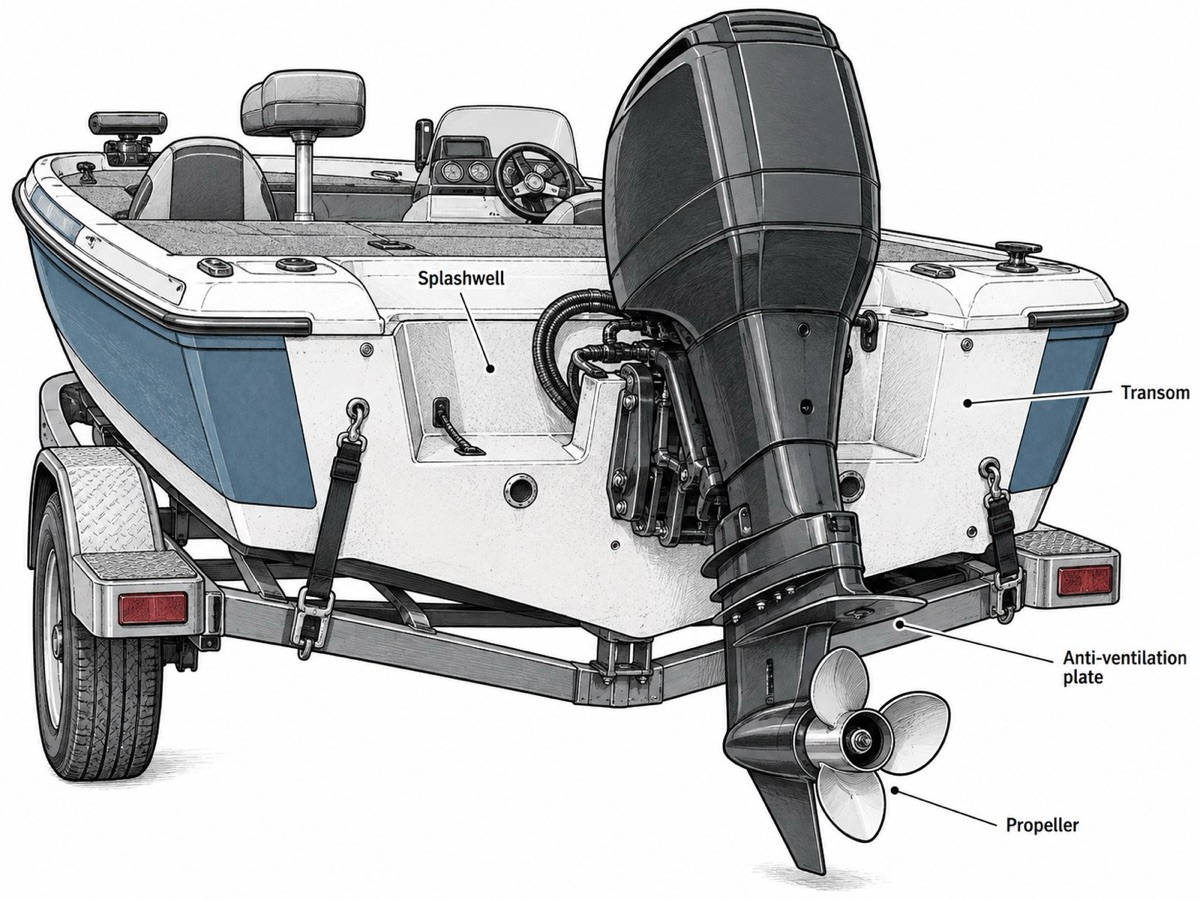
Push down hard on the trimmed-up engine and watch the transom skin, then walk the whole deck with your weight on every step.
These are lines five and six. The rule defines the transom as the surface at the stern of a boat projecting or facing aft. On a fiberglass hull that is a sandwich with a core inside it.
- Any flexing in the fiberglass is a giveaway for a wood core going soft.
- Tap it. Solid sounds solid, rotted sounds hollow.
- A screw that comes out with brown water behind it means expect problems.
The deck is the same test done with your boots. A deck going bad feels spongy or springy underfoot, and a sound one feels solid no matter how hard you stomp. Walk every furniture base, every hatch lip, and the splashwell corners.
I would push that transom before I ever sat down on the boat. It is the one line on this card that can cost more than the hull is worth.
Check 4. The engine tells on itself
Write the hour reading and the serial on the card, then ask for the paper that matches the sticker on the cowling.
This is line seven. A sticker is not a service record. Just serviced, with no invoice behind it, is a claim. Write the hours. Write the serial. Write what paper actually exists, in words.
Line eight is the lower unit, and it talks if the seller lets you crack the drain and vent screws.
- Milky lubricant means water in the gearcase.
- A burnt smell or color means overdue.
- Fine metallic dust on the magnetic screw is normal.
- Larger chips mean a dealer looks inside it.
Two cautions. Do not let the seller run that motor right before the check, because aerated oil can look milky. And no outboard runs on the trailer without water to the pump, nobody stands in the arc of a prop, and nobody gets under a hull on a trailer.
If the seller says no to the screws, the box you tick is cannot check. Nobody rounds that up to pass.
Check 5. Paper and permission
Ask for the sea trial in plain words, with a date, and write the seller's answer on line twelve before you talk about money.
Line eleven is the paper. Under the commercial code the states have adopted, as-is or with all faults excludes implied warranties unless the circumstances indicate otherwise. One boaters' buying guide puts it plainly: sold as-is, recourse may be impossible. It says the contract should carry:
- The hull number.
- The engine serial.
- The trailer serial.
- The boat free of all liens.
- The sale contingent on a satisfactory survey and sea trial.
Survey allowed is permission, not a credential check. Marine surveying is not a licensed industry, anyone may use the title, and that is why banks and insurers often require an accredited one.
Then line twelve, the simplest line on the card: they let you run it, or you walk. If what comes back is a reason instead of a date, the rest of that card is homework you are doing for a stranger, for free.
Any one of the last five alone ends the day. A seller who will not give you twenty minutes and a pencil has already answered the other eleven lines.
The card goes back in your pocket, filled in. It either sends you to the ramp on a date you both said out loud, or it sends you home with your money.